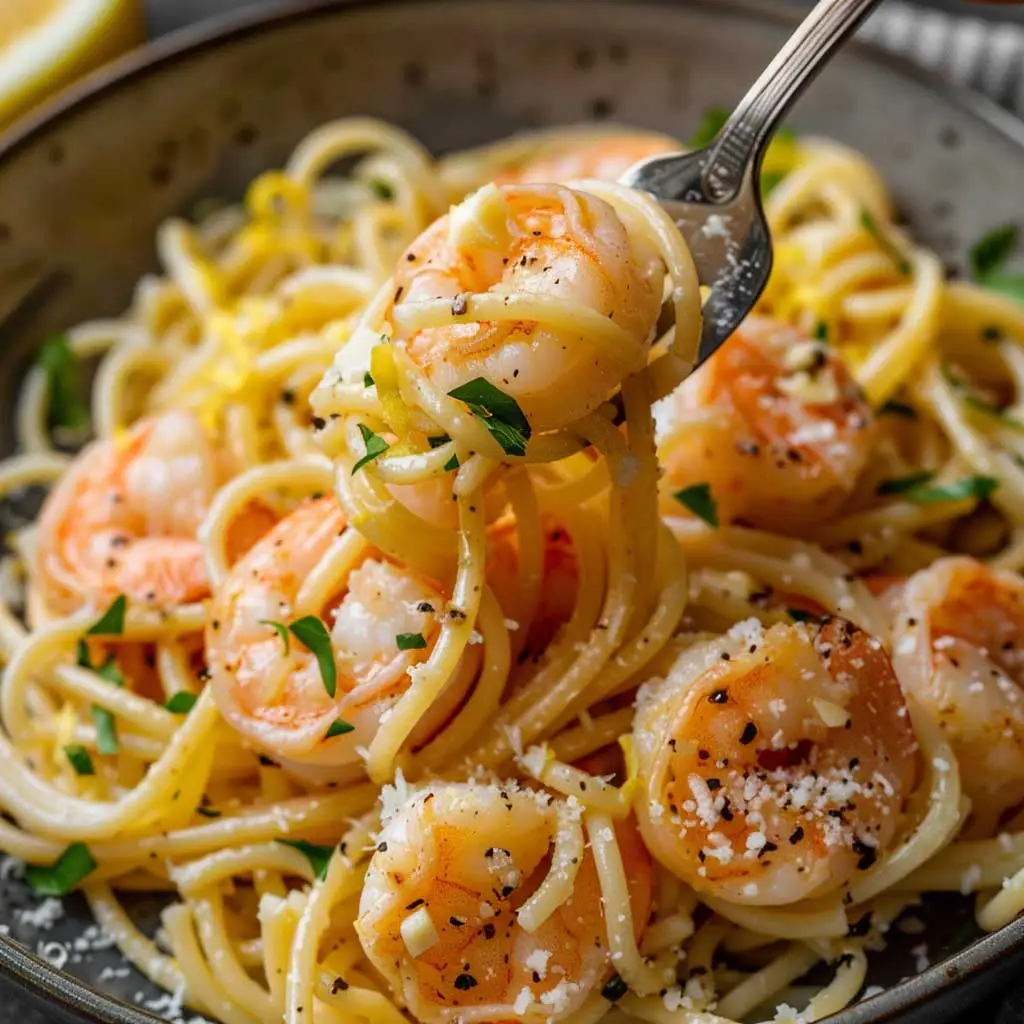
Microwave Garlic Butter Shrimp
1 pot · 9 min · serves 2 servings

Tested in my kitchen
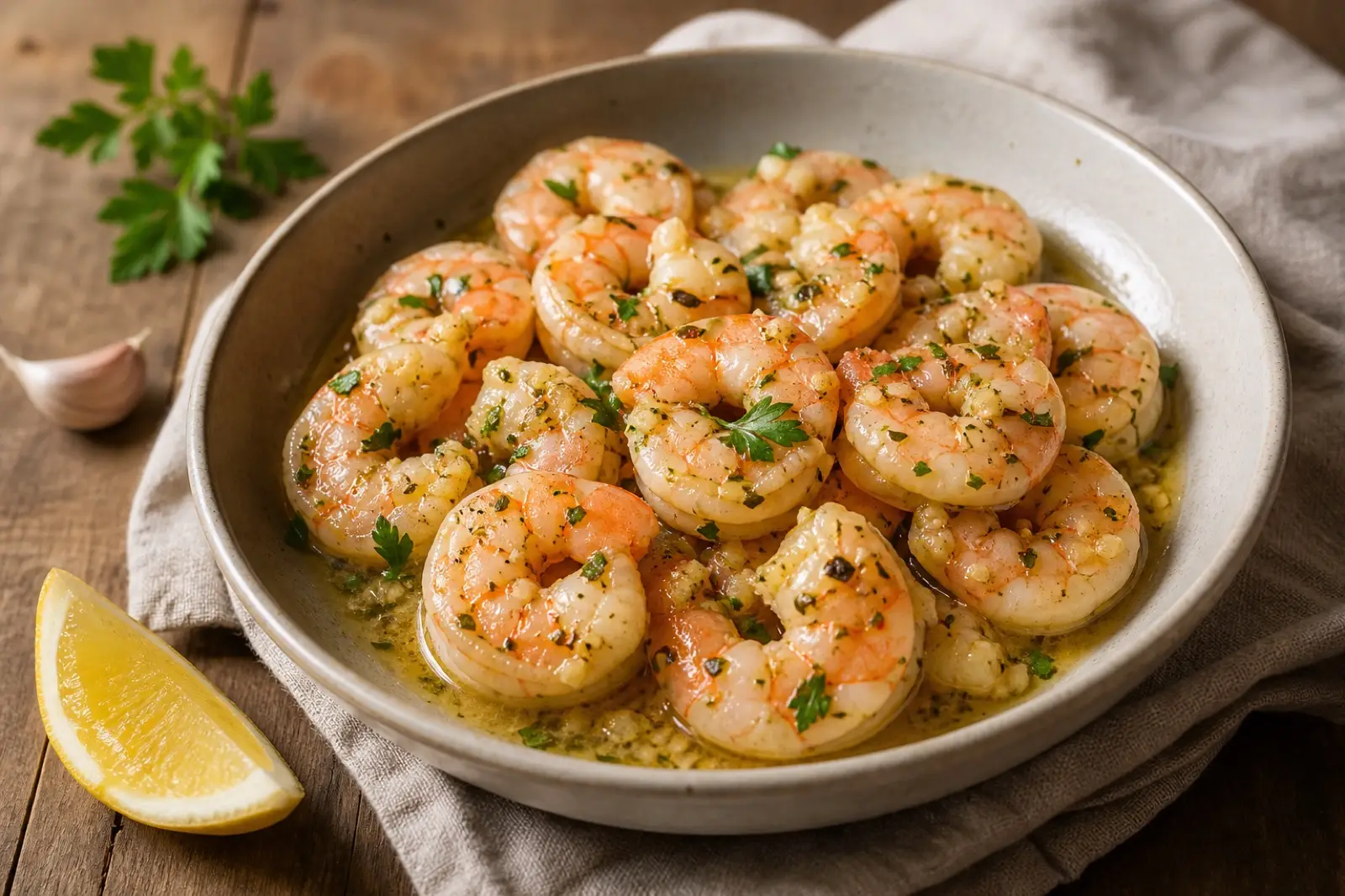

Yes, you can cook shrimp in the microwave, and it comes out great when you do it right. Toss half a pound of large shrimp in melted garlic-lemon butter, cover the bowl, and microwave 2 to 4 minutes depending on your wattage (around 3.5 to 4 minutes at 700W, 2 to 3 minutes at 1000W), stirring halfway. Pull them the second they turn pink and opaque.
This is my kind of dinner. Raw shrimp, no stove, and nothing to scrub afterward. One bowl, one fork, and I’m back at the table with my kids in about five minutes. If you’ve got a busy weeknight and a bag of shrimp, this is the one.
How long to microwave shrimp (by wattage)
This is the part most people get wrong, and it’s why shrimp turns to rubber. Cooking time depends almost entirely on your microwave’s wattage. Check the sticker inside the door, on the back, or in the manual, then use the times below for 8 oz (about 1/2 lb) of large shrimp.
| Microwave wattage | Time on HIGH (8 oz large shrimp) |
|---|---|
| 700W | ~3.5-4 min |
| 800W | ~3-3.5 min |
| 900W | ~2.5-3 min |
| 1000W | 2-3 min |
| 1100W | ~2-2.5 min |
A quick note on where these numbers come from: they’re scaled to your wattage and cross-checked against standard cooking and food-safety guidance, not stopwatch results from my kitchen. Every microwave runs a little differently, and shrimp size varies, so treat the table as a starting point. Start at the low end for your wattage and let the visual cue tell you when to stop, not the clock.
Read this before you start the timer:
Shrimp overcook in seconds, so it’s always better to pull them early and add a short burst than to set a longer time and walk away.
Is microwave shrimp safe? How to tell when it’s done
Microwaving raw shrimp is safe, as long as you stir for even heating and confirm every single piece is opaque before you eat it.
Here’s the part worth understanding: the real risk with microwaved shrimp isn’t the microwave, it’s uneven heating. Microwaves cook in hot and cold spots, so some shrimp can still be undercooked while others are done. Raw shrimp can carry bacteria like Vibrio, Salmonella, or E. coli, and undercooked pieces are where that risk lives. That’s why stirring halfway is a food-safety step, not just a texture trick. It evens out the heat so every piece reaches a safe temperature.
What “done” looks like:
- The FDA guidance is to cook shrimp until the flesh is pearly/white, opaque, and firm. Raw shrimp is translucent and grayish.
- The safe minimum internal temperature is 145°F (63°C), but a single shrimp is too small to probe reliably, so the opaque and pink visual cue is the practical standard cooks actually use.
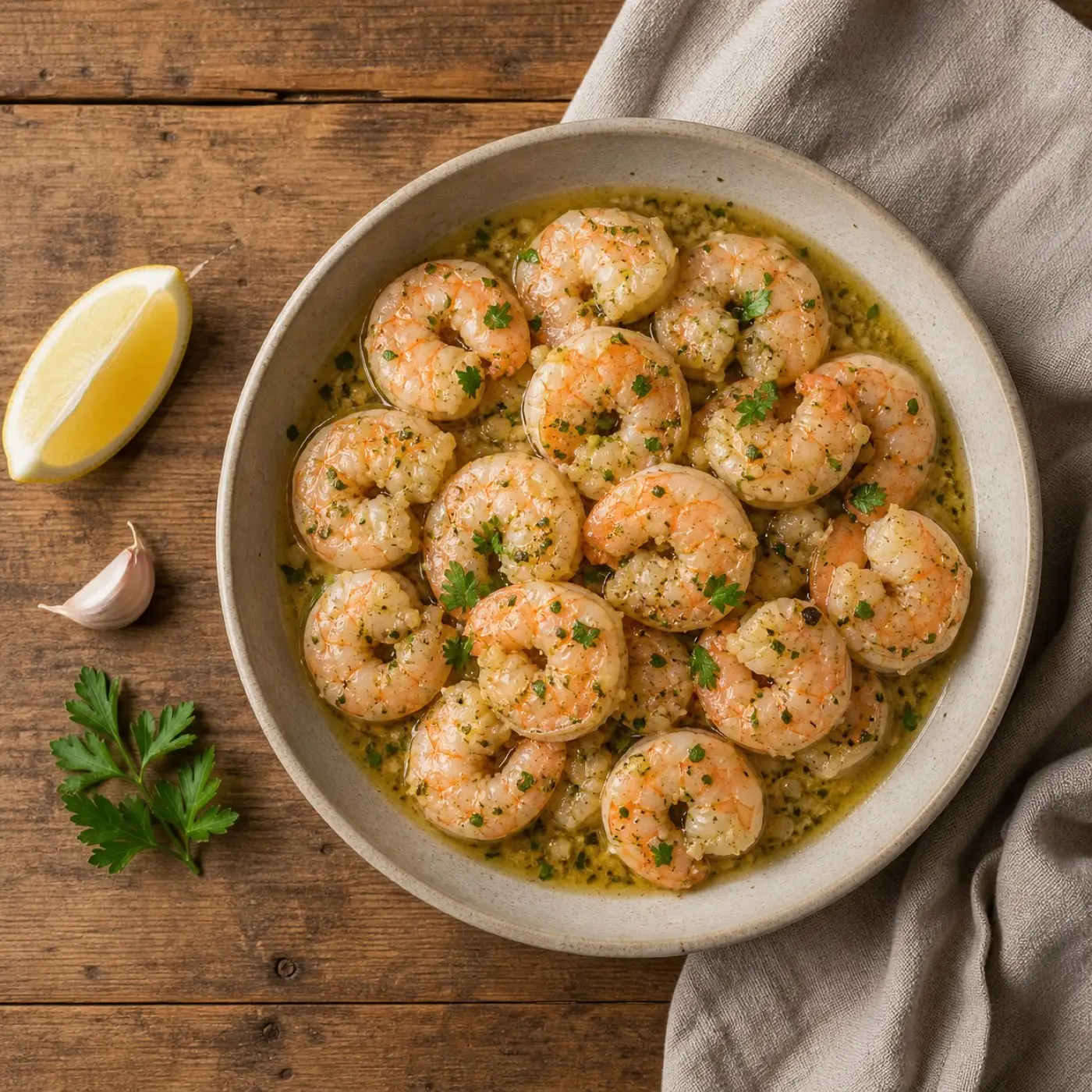
- Look for opaque, pearly-white flesh with pink accents and a gentle C-curl. That’s perfect.
- A tight O-curl, where the tail curls all the way around to meet the head end, means it’s overcooked.
If any piece still looks translucent or gray, it isn’t done. Stir and add a 30-second burst.
Why microwave shrimp goes rubbery (and how to avoid it)
Rubbery shrimp is almost always one thing: overcooking. Shrimp is lean and cooks incredibly fast, and the window between perfectly tender and tough is a matter of seconds, especially in a microwave, where the heat keeps working during the rest time.
To keep shrimp tender:
- Use the low end of your wattage time and check early.
- Pull the shrimp the moment they hit opaque and pink, even if you think they could go a little longer.
- Remember the 1-minute rest is still cooking them. Factor it in.
- Stir halfway so no pieces sit in a hot spot and toughen while others catch up.
If your shrimp came out rubbery last time, cut 30 seconds off and rely on the C-curl visual instead of the clock.
Upgrades and substitutes
- Heat: add a pinch of red pepper flakes or a dash of hot sauce to the butter.
- Herbs: swap the dried oregano and thyme for Italian seasoning, or finish with fresh basil.
- Richer sauce: stir a splash of white wine or a spoonful of grated parmesan into the butter.
- Butter swap: olive oil works if you’re out of butter, though you’ll lose some richness.
- Citrus: lime in place of lemon leans it toward a more Baja flavor.
- Frozen shrimp: thaw fully first (see the FAQ) before using this method.
If you’re new to the recipe, I’d make it plain the first time so you get a feel for the timing, then reach for the red pepper flakes or a splash of white wine once you know how your microwave handles it.
What to serve with microwave garlic butter shrimp
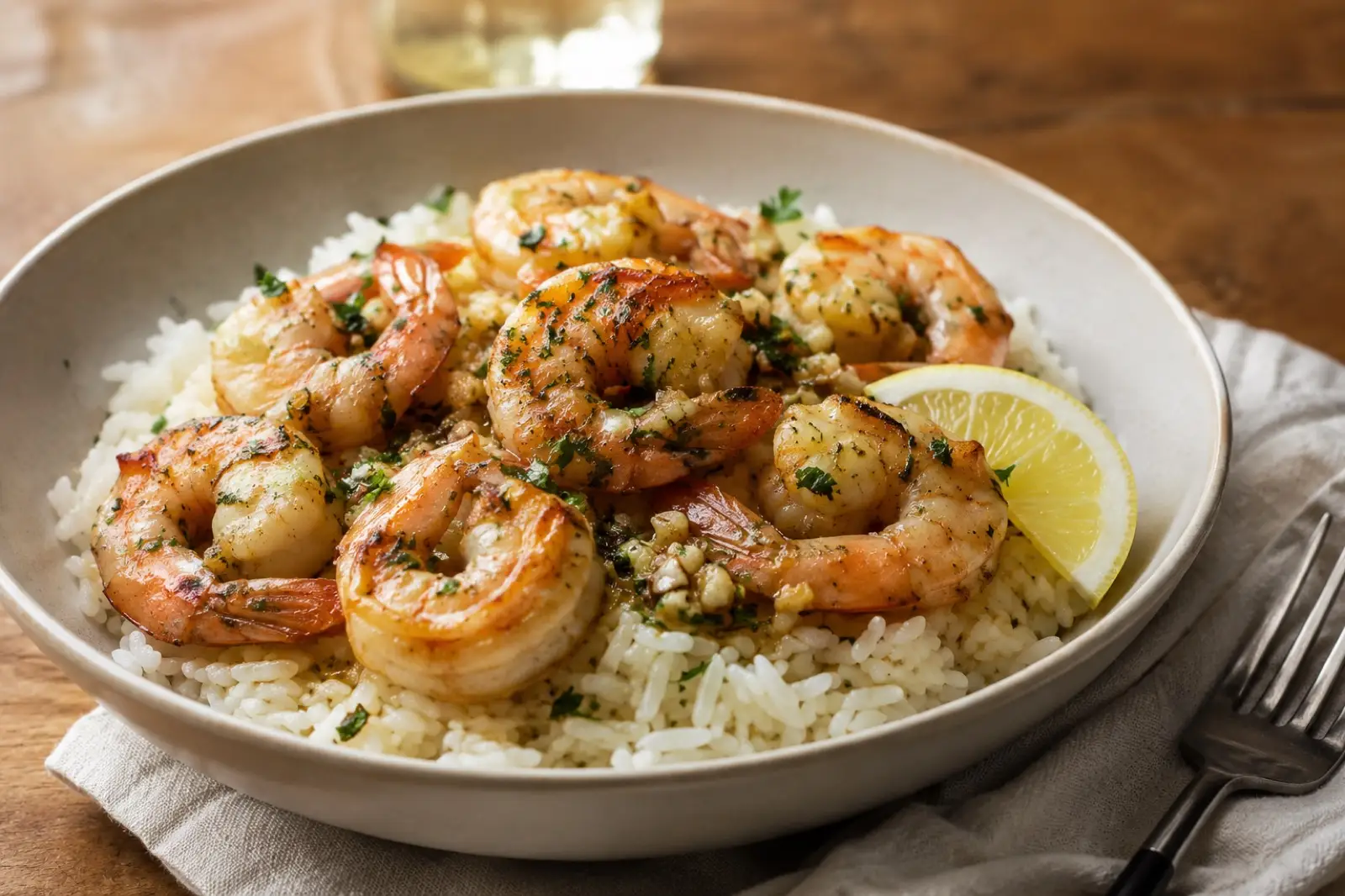
The garlicky butter sauce is the reason to serve this over something that soaks it up:
- Steamed or microwaved rice, or quinoa
- Pasta or angel hair
- Crusty bread to mop the sauce
- Steamed vegetables (broccoli, green beans, asparagus)
- A simple green salad for a lighter plate
Want more one-bowl, no-real-cooking dinners? Try Microwave Sweet and Sour Pineapple Chicken with Rice, Microwave Pepperoni Pizza in a Mug, or the Cheesy Chicken Alfredo Bake. Craving more shrimp? The Teriyaki Shrimp and Vegetable Rice Bowl is another quick one. And for something in a pan but still one dish, the Easy 20-Minute One-Pot Shakshuka and the One-Pot Thai Coconut Curry Chicken (which takes beautifully to shrimp as a swap) are both worth a look.
Wattage guide (8 oz large shrimp)
700W ~3.5-4 min · 800W ~3-3.5 · 900W ~2.5-3 · 1000W 2-3 · 1100W ~2-2.5. Stir halfway, start at the low end, and stop the moment the shrimp turn pink and opaque.
Nutrition
The information shown is an estimate provided by an online nutrition calculator. It should not be considered a substitute for a professional nutritionist’s advice. See our full nutrition disclosure here.
Frequently asked questions
Can you microwave shrimp?
Yes. Toss shrimp in a sauce or a little butter, cover, and microwave on HIGH for 2 to 4 minutes depending on wattage, stirring halfway, until pink and opaque.
Is it safe to microwave shrimp?
Yes, as long as you stir for even heating and confirm every piece is opaque before eating. The main risk is uneven microwave heating leaving some pieces undercooked, so stirring halfway is a safety step.
How long do you microwave shrimp?
For 8 oz of large shrimp: about 3.5 to 4 min at 700W, 3 to 3.5 min at 800W, 2.5 to 3 min at 900W, 2 to 3 min at 1000W, and 2 to 2.5 min at 1100W. Always stir halfway and start at the low end.
How do you know when microwave shrimp is done?
The flesh turns opaque and pearly-white with pink accents and forms a gentle C-curl. Translucent or gray means it’s not done; a tight O-curl means it’s overcooked.
Why is my microwave shrimp rubbery?
It’s overcooked. Shrimp cooks in seconds and keeps cooking during the rest. Pull it the instant it’s pink and opaque, use the low end of the time range, and check early.
Can you microwave raw shrimp, or only cooked or frozen?
You can microwave raw shrimp, and that’s what this recipe does. Already-cooked shrimp only needs a gentle reheat of about 1 minute. Frozen shrimp should be thawed fully before cooking (run under cold water until no longer icy), then cooked as raw.
What do you serve with microwave garlic butter shrimp?
Rice, pasta, quinoa, crusty bread, or steamed vegetables all work well and soak up the garlic butter sauce.
Does microwaving shrimp smell?
It can. Keeping the dish covered contains most of the smell and helps the shrimp steam more evenly at the same time.
A note from Anna
Between a full-time job and two hungry kids, the last thing I want after work is a sink full of pans. That’s why a no-stove shrimp dinner earns a permanent spot in my rotation. Shrimp cook fast, the microwave does the work, and there’s exactly one bowl to rinse. The only thing that matters is not overcooking them, so watch for that pink-and-opaque C-curl and you’ll be at the table before anyone asks what’s for dinner.
The recipe
Microwave Garlic Butter Shrimp
- Prep
- 5 min
- Cook
- 4 min
- Total
- 9 min
Instructions
- Microwave the butter in a microwave-safe bowl for 30 to 45 seconds, until fully melted.
- Stir in the minced garlic, lemon juice, oregano, thyme, and a pinch of salt and pepper.
- Add the shrimp and toss until every piece is coated in the butter mixture.
- Cover the bowl with a vented microwave lid or loosely with microwave-safe wrap so steam can escape.
- Microwave on HIGH for 2 to 4 minutes (see the wattage guide), stirring halfway through, until the shrimp are pink and opaque.
- Let stand, covered, for 1 minute. The shrimp finish cooking in their own heat.
- Scatter with fresh parsley and serve with the garlic butter sauce spooned over the top.
- Protein23g44%
- Carbs2g4%
- Fat12g52%
Full Nutrition Facts label
Nutrition Facts
2 servings per recipe
Serving size1 serving
Amount per serving
% Daily Value*
The % Daily Value (DV) tells you how much a nutrient in a serving of food contributes to a daily diet. 2,000 calories a day is used for general nutrition advice.
An automatic estimate from the ingredients - a friendly guide, not medical advice. Real values shift with brands, sizes, and how you cook.
Make it yours
Track it and jot your own tweaks — private to this device.
Cook log
Not made yet — tap below the first time you cook it.
Your notes
Your notes will collect here, newest first.